
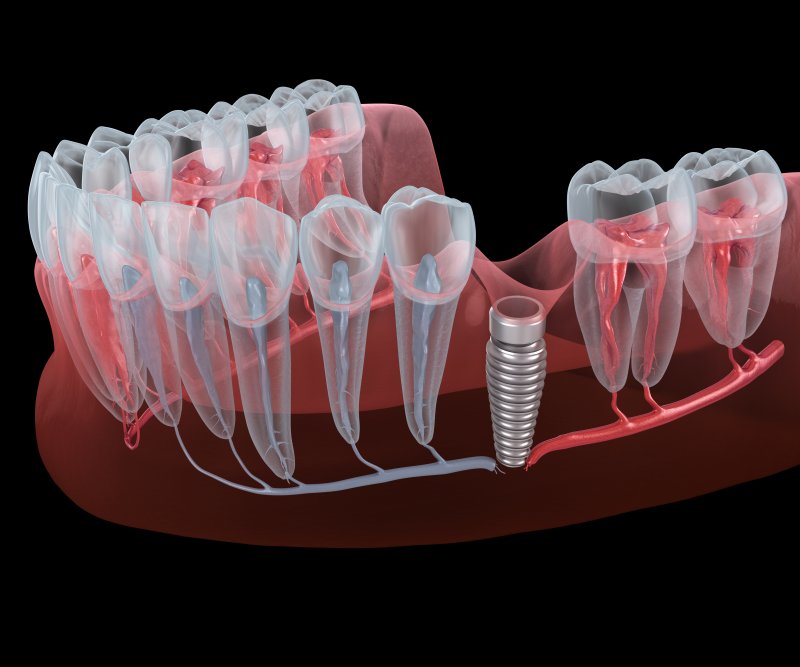
Dental implants are the best way to replace lost teeth, but it may seem strange if you find that your restoration seems sensitive since it doesn’t have any nerve endings. In some cases, a dental implant seeming sore or sensitive may be a symptom of an oral health issue that requires restorative treatment, and your dentist will be happy to help you understand the cause of your discomfort and the best way to resolve it. Here’s a quick look at why your dental implant may seem sensitive and how your dentist may be able to help.
What Is a Dental Implant?
A dental implant consists of a titanium post surgically inserted into the jawbone, a lifelike dental restoration such as a bridge, crown, or denture, and an abutment piece anchoring the other two components together. These devices allow patients to replace their lost teeth with beautiful artificial replicas that look, work, and feel just like the real thing. However, patients who receive dental implants will need to practice excellent oral hygiene to keep them in great shape.
Why Does My Dental Implant Seem Sensitive?
If your dental implant seems sensitive, it may be due to inflammation or infection of the gum tissue supporting it. If this happens, the nerves in the soft tissue may send pain signals to the brain, which can make the device feel uncomfortable. The best ways to prevent this problem are to practice excellent oral hygiene by brushing and flossing, see your dentist every six months for checkups and cleanings, and limit your intake of sugary, acidic, and starchy foods and beverages.
How Can My Dentist Help If My Dental Implant Feels Sensitive?
If gum disease is threatening your dental implant, you may be able to reverse it with improved oral hygiene if it is still in its early stages. However, advanced gum disease will require professional treatments such as:
- Scaling and root planing: Your dentist will use specialized tools to carefully remove infectious material from your gums and along the roots of the teeth.
- Antibiotic therapy: Your dentist may recommend attacking the destructive bacteria directly with topical antibiotic treatments designed to address oral infections.
A feeling of sensitivity around your dental implant may mean you need help from your dentist. Consulting with your oral health professional will help you understand how to keep your mouth healthy and comfortable.
About the Practice
Coats Dental Group tends to the oral health needs of the community of Longmont. Led by Drs. Brian and Kevin Coats, the staff treats each patient with compassion, courtesy, and outstanding customer service. Areas of expertise include general, restorative, cosmetic, and emergency dentistry as well as implant services. If you are concerned about the health of your dental implants, contact the office online or dial (303) 776-4090.